
What Is the 70/30 Rule in Marketing and Why Does It Matter?
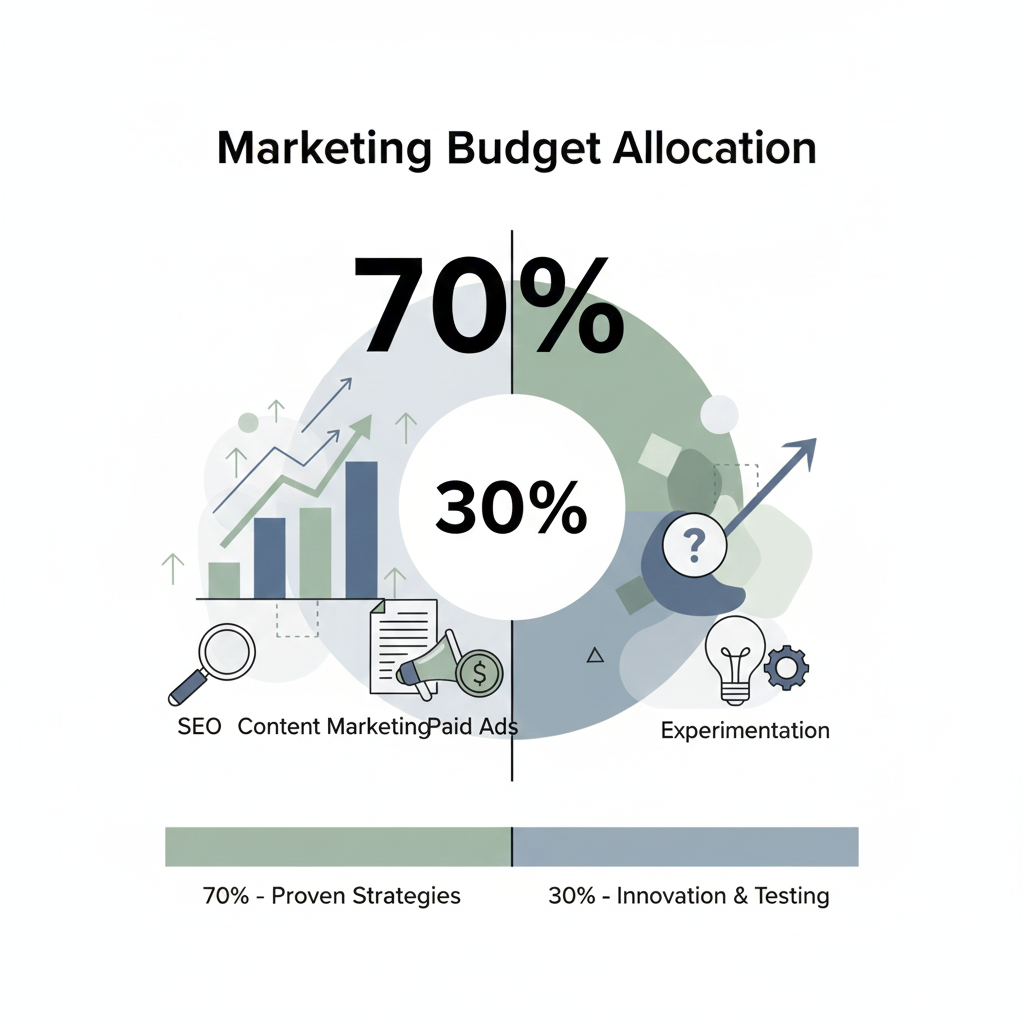
Many business owners and marketers ask a simple but powerful question: 70/30 rule in marketing. As marketing budgets tighten and competition increases, companies want smarter ways to allocate time, money, and effort. This rule provides a practical framework for balancing stability with innovation. Instead of relying on guesswork, businesses use the 70/30 approach to drive consistent growth while still testing new opportunities.
In this article, we therefore clearly explain what the rule means, how it works, and, ultimately, when it delivers the best results overall and in practice.
What Is the 70/30 Rule in Marketing?
The 70/30 rule in marketing is therefore a strategic guideline used to clearly divide marketing resources into two distinct parts overall.
- 70 percent therefore primarily focuses on proven, core marketing activities overall.
- 30 percent is therefore primarily allocated to experimentation and new initiatives overall.
As a result, businesses therefore protect steady performance while still allowing room for innovation overall and strategically.
This rule therefore applies broadly to budgets, content, campaigns, channels, and even team effort overall.
Why the 70/30 Rule Matters for Businesses
Marketing carries risk. However, avoiding experimentation can slow growth. The 70/30 rule solves this balance.
It helps businesses to:
- Maintain consistent leads and revenue
- Reduce financial risk
- Test new ideas without overcommitting
- Adapt to market changes
Therefore, the rule supports both short-term performance and long-term growth.
How the 70/30 Rule Works in Practice
Applying the Rule to Marketing Activities
In practice, the rule separates reliable strategies from experimental ones.
The 70 percent typically includes:
- Established marketing channels
- High-performing campaigns
- Proven content formats
- Optimised paid ads
- SEO strategies that already deliver results
The 30 percent usually covers:
- New platforms or channels
- Emerging ad formats
- Creative content experiments
- Audience testing
- New technologies or tools
Consequently, businesses stay competitive without risking their core performance.
70/30 Rule in Marketing Strategy
When applied to overall strategy, the 70/30 rule becomes a planning tool rather than just a budget split.
For example:
- 70 percent of effort goes into existing customer acquisition
- 30 percent focuses on new audience segments
Similarly:
- 70 percent supports current products
- 30 percent tests new offers or positioning
Because of this structure, marketing teams stay focused and flexible at the same time.
Businesses often apply structured marketing frameworks like the 70/30 rule alongside professional digital strategies to improve planning, performance, and long-term growth outcomes.
https://it.providersconsultant.com.au/digital-marketing/
Examples of the 70/30 Rule in Marketing
Content Marketing Example
A company may use:
- 70 percent of content on educational blogs and SEO pages
- 30 percent on videos, podcasts, or interactive content
Paid Advertising Example
Another business may allocate:
- 70 percent of ad spend to Google Search or Meta ads
- 30 percent to new platforms such as LinkedIn Ads or YouTube
Social Media Example
Teams often apply the rule by:
- Posting 70 percent proven content
- Testing 30 percent creative or trend-based posts
As a result, data-driven decisions improve performance over time.
Benefits of Using the 70/30 Rule
The rule delivers several advantages when used consistently.
Key benefits include:
- Better budget control
- Reduced marketing risk
- Continuous improvement
- Clear performance measurement
- Smarter innovation testing
Therefore, businesses gain confidence in their marketing decisions.
Common Mistakes When Applying the 70/30 Rule
Despite its simplicity, some businesses misuse the rule.
Common mistakes include:
- Treating the 30 percent as random spending
- Ignoring data from experimental campaigns
- Changing the ratio too frequently
- Applying the rule without clear goals
Because of this, businesses should track results carefully and adjust based on performance
Is the 70/30 Rule Still Relevant Today?
Yes. In fact, the rule is even more relevant in fast-changing digital markets.
With constant updates in algorithms, platforms, and consumer behaviour, businesses need stability and flexibility. The 70/30 rule provides that balance.
However, the ratio is not fixed forever. Some organisations may shift to 80/20 or 60/40 depending on growth stage and risk tolerance.
When the 70/30 Rule Works Best
The rule works best when:
- Core marketing activities already perform well
- Teams track data consistently
- Experiments have clear objectives
- Decisions are reviewed regularly
Consequently, structured experimentation leads to sustainable growth.
Conclusion
So, what does the 70/30 rule in marketing really offer? It gives businesses a clear framework to balance reliability with innovation. By protecting proven strategies and testing new ideas carefully, companies reduce risk while unlocking growth opportunities.
When applied with discipline and data, the 70/30 rule becomes a powerful tool for smarter marketing decisions and long-term success.
For additional guidance on building effective business and marketing strategies, Australian businesses can refer to official resources provided by the Australian Government through business.gov.au.