
What is a reasonable budget for small business website?
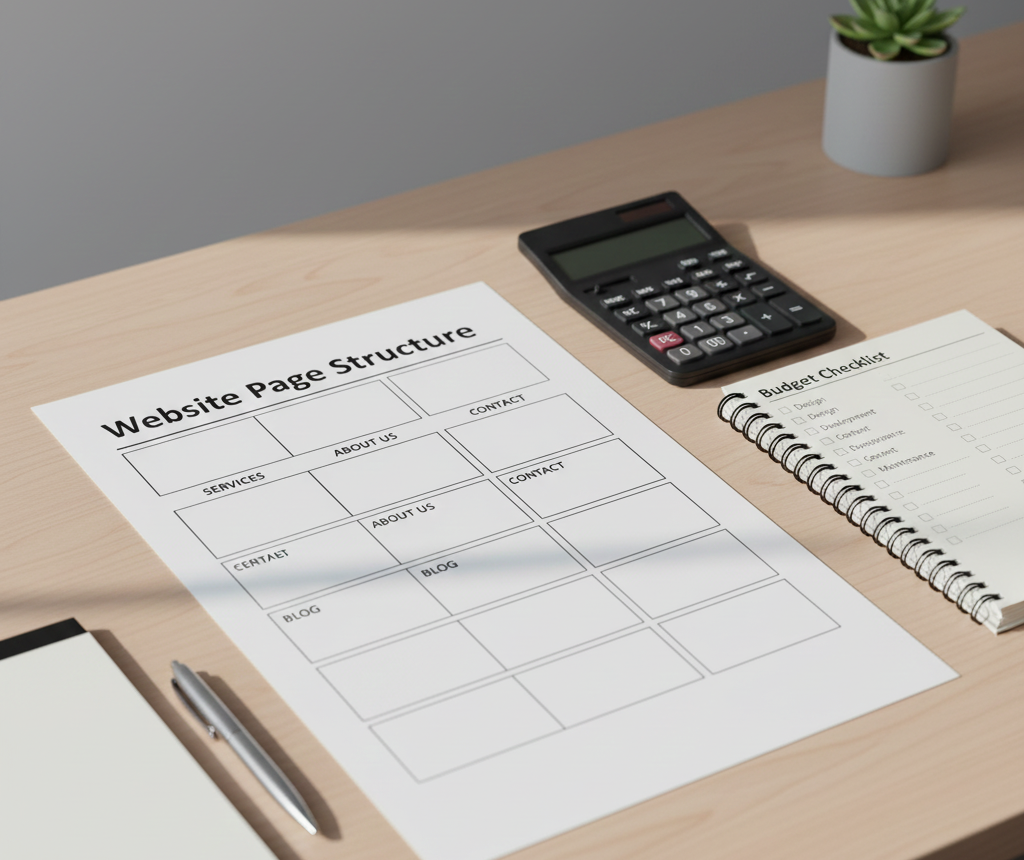
For many small business owners, deciding how much to spend on a website feels uncertain. Quotes can range from a few hundred dollars to several thousand, often without clear explanations. This leads to a common question: what is a reasonable budget for a small business website?
In practice, the answer depends less on “average prices” and instead on what the website is expected to do for the business.
What Is a Reasonable Budget for a Small Business Website on Average?
In most cases, generally, a reasonable budget for a small business website typically falls between $1,500 and $5,000.
This range typically supports:
- A professional design
- A clear site structure
- Mobile responsiveness
- Basic SEO foundations
- A website that represents the business properly
Typically, budgets below this range often sacrifice structure or scalability, whereas, in contrast, budgets above it usually involve custom design, advanced functionality, or stronger growth goals.
Why Small Business Website Budgets Vary So Much
Business Goals Matter More Than Price
In general, a website built simply to “exist online” typically costs far less than one designed to:
- Generate leads
- Support sales
- Build credibility
- Scale with the business
As a result, a reasonable budget depends on purpose, not just page count.
Website Size and Structure
Most small business websites include:
- Home page
- About page
- 3–6 service pages
- Contact page
- Basic supporting pages
Even so, costs vary depending on layout design, content formatting, and navigation planning.
What a Reasonable Budget Usually Includes
A properly priced small business website typically covers:
- Planning and page structure
- Professional design or customisation
- Mobile-friendly layouts
- CMS setup (often WordPress)
- Basic on-page SEO setup
- Contact forms and integrations
- Testing and launch support
However, content writing, advanced SEO, and ongoing maintenance are often additional.
How Much Is Too Cheap for a Small Business Website?
Websites priced under $1,000 often rely heavily on templates with minimal planning.
While this may work short term, common issues include:
- Poor SEO structure
- Weak branding
- Limited flexibility
- Early redesign costs
In practice, very low budgets usually shift costs into the future rather than removing them.
To put this into context, this also ties in with our guide on website designer cost, which explains how pricing changes based on scope, experience, and project size.
When a Higher Website Budget Makes Sense
A small business may reasonably spend $5,000 or more when:
- Competing in a crowded market
- Relying on organic search traffic
- Offering multiple services
- Planning for growth over several years
In these cases, the website functions as a business asset rather than just an online presence.
Freelancer vs Agency: Budget Differences
Freelancers
- Typical range: $1,500 – $3,500
- Best for simpler sites and limited scope
- More flexibility, less overhead
Agencies
- Typical range: $3,000 – $7,000
- Better for strategy, UX, and long-term planning
- Includes project management and QA
Both can be reasonable choices depending on expectations and complexity.
How to Set a Realistic Website Budget
Before requesting quotes, clarify:
- What the website must achieve
- How long you expect to use it
- Whether SEO and performance matter
- How often content will change
Ultimately, a realistic budget therefore reduces rushed decisions, underbuilt websites, and repeated redesigns.
Final Thoughts on Small Business Website Budgets
So, what is a reasonable budget for a small business website?
It’s one that balances professionalism, usability, and future needs without paying for features you don’t need or cutting corners that cost more later.
Understanding what drives pricing in practice helps small businesses therefore invest wisely and over time build websites that support growth rather than limit it.
Industry resources such as Smashing Magazine highlight how proper website planning and usability decisions directly influence long-term value and overall budget.